This is the whole package as delivered — not a mock-up. Everything below was produced from a single article on the client's blog, then published across their channels.
Video
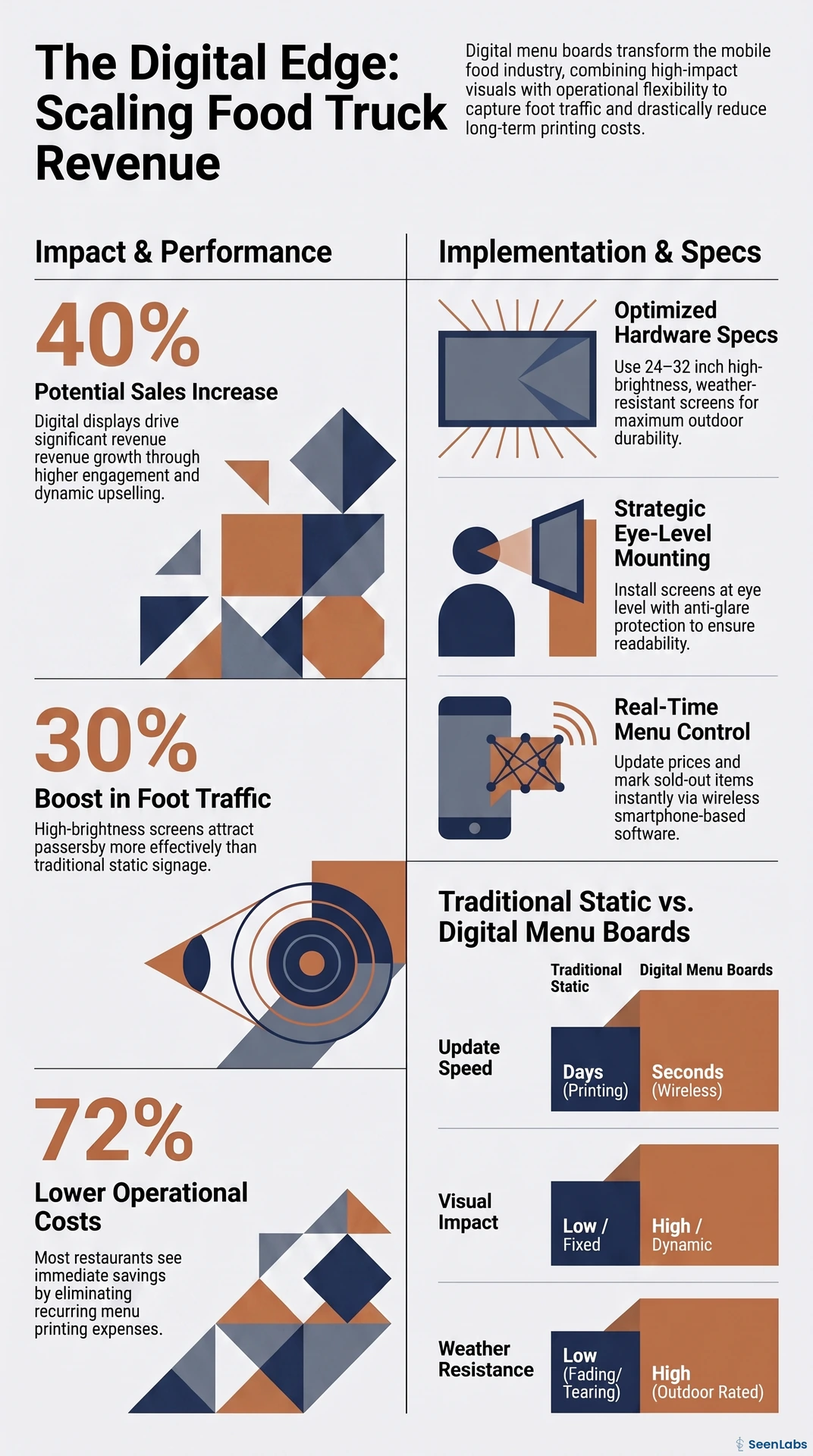
2 cutsInfographics
2 formats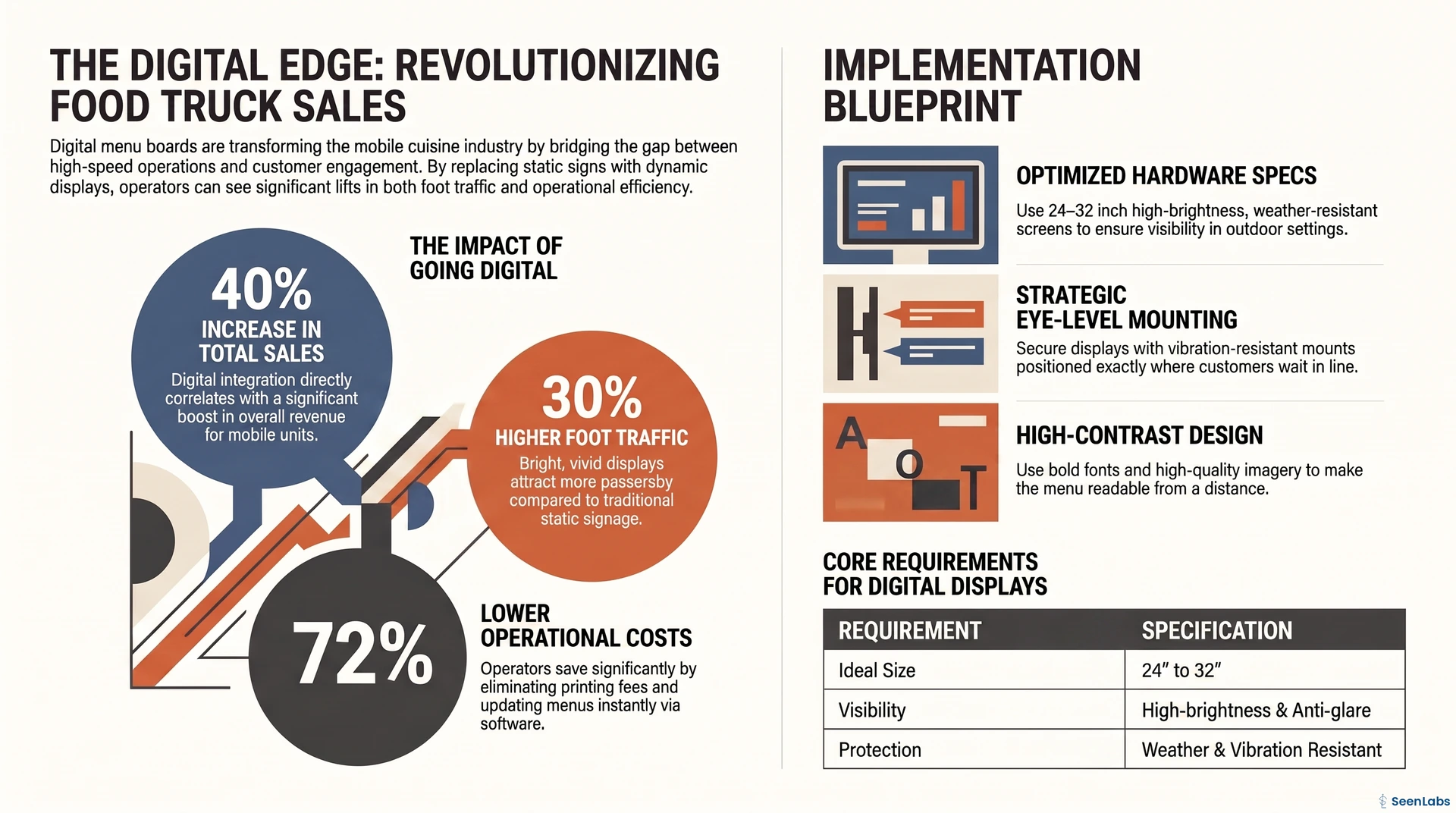
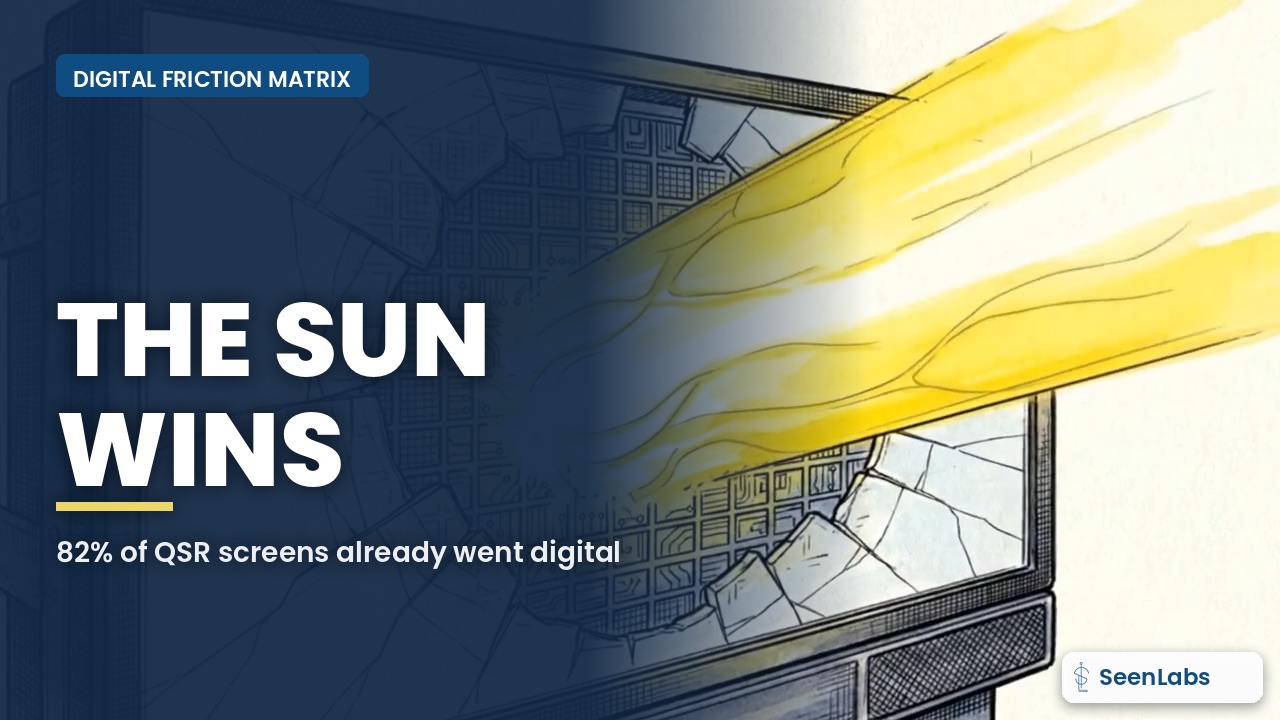
Thumbnail variants
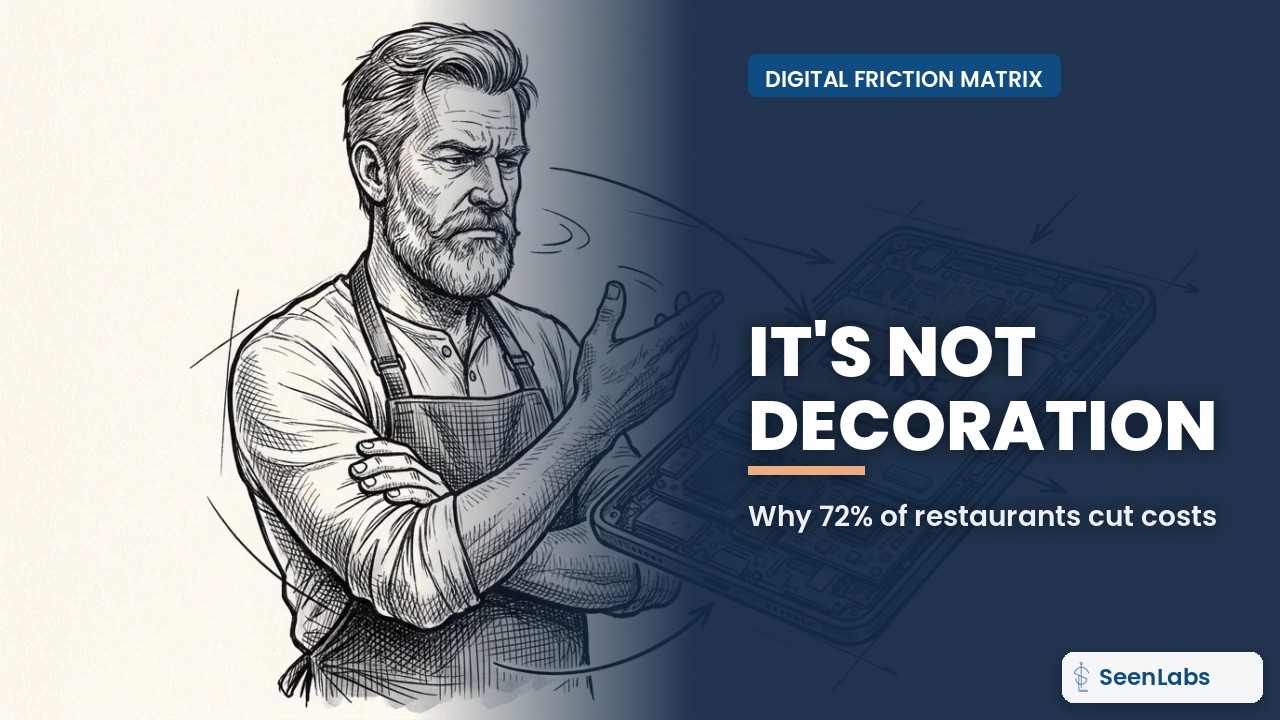
3 for A/B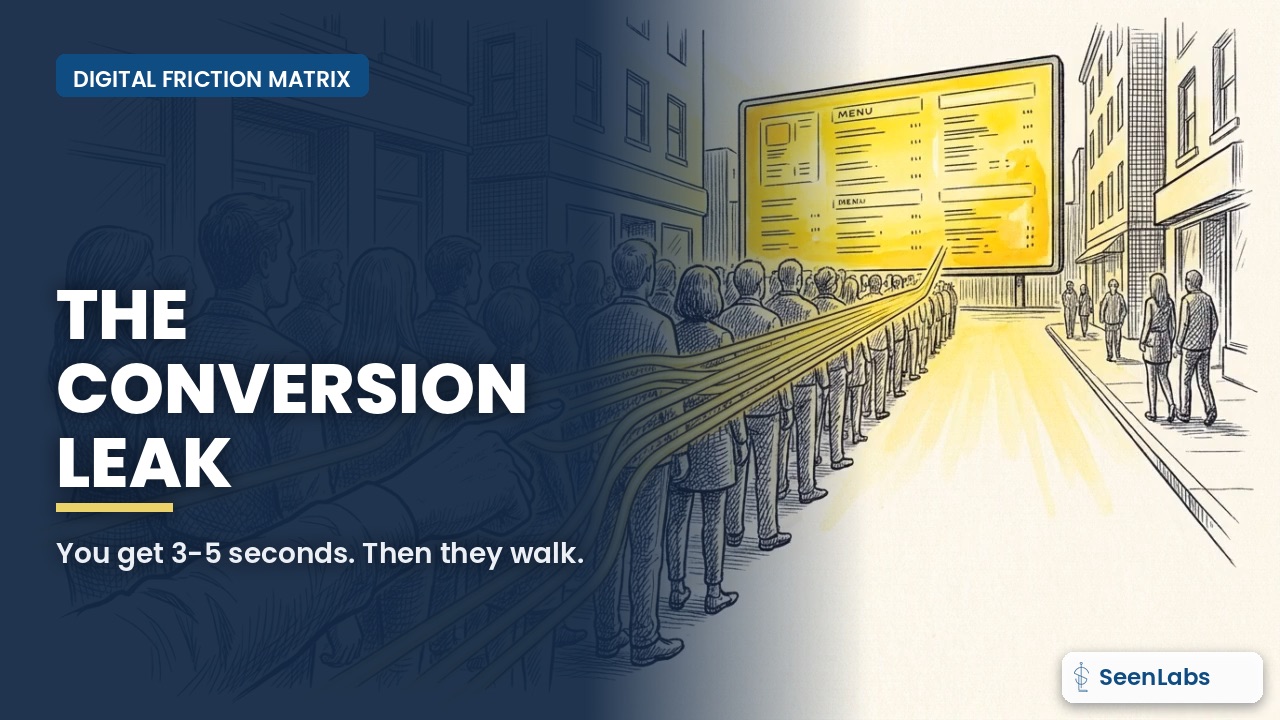
Copy — ready to paste
6 platformsLinkedIn · company 190 words · link in first comment
Eighty-two percent of quick-service restaurant screens already run a digital menu — the highest of the 21 industries measured. Across all of them combined, menus account for just 7% of total digital signage screen time. QSR is that concentrated for one reason: the content carries an operational mandate. It has to change constantly.
Most operators still treat the screen as a passive poster and put a static, glowing PDF of the paper menu on it. That is where the return dies. An unreadable board caps the maximum length of your queue and depresses average ticket size at the same time.
The lever is content discipline, not hardware spend. Real-time 86'ing is why 72% of surveyed restaurants report an overall reduction in operating costs — no reprint fees, no halting a lunch rush to explain that a promoted item is sold out. Dayparting turns the same screen into a yield tool: McDonald's runs decision logic on weather, current traffic and precise inventory levels, and that logic now runs from a tablet.
The physics still come first. A display that loses to direct sunlight makes every other decision irrelevant.
LinkedIn · founder 199 words · first person
I keep coming back to one pair of numbers from this episode. Twenty-six percent of customers want their food in under five minutes. But a much larger 41% will accept a five to eight minute wait — if the line is managed correctly.
That gap is where a lot of margin quietly sits, and almost nobody treats it as a design problem.
Queuing theory states it plainly: unoccupied time feels longer than occupied time. A static board gives the person standing in your line nothing to do. A dynamic one gives them something to process, which compresses the wait they think they are having and speeds up the decision of the person behind them. Same screen, two jobs.
What is harder to argue with is the discipline it demands. Limit the item count to avoid cognitive overload. Bold, high-contrast type. Imagery someone can actually read from fifteen feet away. Most operators skip all of it, put a glowing PDF on an expensive display, and conclude that digital signage does not pay.
Eighty-two percent of QSR screens already run a digital menu. The technology stopped being the constraint a while ago. Execution is the constraint.
Facebook 205 words
The lunch rush hits, you are out of the item you promoted all week, and now a staff member is explaining that to every third customer instead of taking orders.
That is not a service problem. It is a menu problem.
Printed menus lock your information in place. The moment inventory runs dry, your board is lying to the people in your line, and someone has to stand there correcting it by hand. A digital board changes the mechanics: a staff member updates it from a point-of-sale tablet and the unavailable item disappears from public view instantly. That is real-time 86'ing, and eliminating those reprint fees and errors is why 72% of surveyed restaurants report an overall reduction in operating costs.
The bigger lever is what the screen does the rest of the day. Dayparting swaps the entire menu based on time of day — breakfast to lunch, or prioritising cold drinks the moment the sun hits. McDonald's runs that logic on weather, current traffic and precise inventory levels. The same strategy executes from a basic tablet.
Most operators never get there, because they buy the display and then show a static, glowing PDF of the paper menu on it.
Instagram 125 words
A static menu board caps how long your line can get.
It also depresses the average ticket. Same board, two losses.
You get three to five seconds as someone walks past. That is the entire window.
→ 82% of QSR screens already run a digital menu — the highest of 21 industries measured
→ 72% of surveyed restaurants report lower operating costs after dropping print
→ 26% of customers want food in under five minutes, but 41% accept a 5–8 minute wait if the line is managed
Unoccupied time feels longer than occupied time. A board people can actually read gives them something to process while they wait.
Most operators buy the screen and put a glowing PDF on it.
X 258 characters including link
26% of your customers want food in under five minutes. 41% will wait 5–8 — if the line is managed.
Unoccupied time feels longer than occupied time. A static board gives them nothing to do.
Same screen, two jobs.
Google Business 336 characters · "What's new" update
26% of your customers want food in under five minutes. 41% will accept five to eight minutes — if the line is managed. Queuing theory: unoccupied time feels longer than occupied time. A board people can actually read gives someone in line something to process, which compresses the wait they think they are having. Full breakdown below.
Button: Learn more → article · Image: landscape infographic, 16:9
YouTube 3 title options · 181-word description · 12 tags
Title A — Your Menu Board Is Capping Your Ticket Size
Title B — Digital Menu Boards: 30% More Foot Traffic (chosen)
Title C — 82% of QSR Screens Already Run Digital Menus
You have three to five seconds to convert a passerby, and a static board spends all of them making the customer work. Eighty-two percent of quick-service restaurant screens already run a digital menu — the highest of the 21 industries measured, against 34% in car dealerships and single digits in corporate offices.
Files in this package
as delivered| File | Format | Size |
|---|---|---|
| Long cut, branded | MP4 · 1280×720 · 7:51 | 93 MB |
| Long cut, web encode | MP4 · 1280×720 · 7:51 | 51 MB |
| Vertical cut, branded | MP4 · 720×1280 · 1:09 | 7.1 MB |
| Subtitles | SRT · 151 cues | 13 KB |
| Infographic, landscape | PNG + WebP · 1920×1072 | 1.3 MB |
| Infographic, portrait | PNG + WebP · 1072×1920 | 1.4 MB |
| Thumbnails A / B / C | PNG · 1280×720 | 2.5 MB |
| Social copy, 6 platforms | MD | 8 KB |
| Episode cover | JPG · 1920×1080 | 216 KB |
Two items in the current package spec — a plain-text transcript and the JSON-LD schema block — are not in this episode. It shipped before we added those steps; the timecoded SRT above was doing that job at the time. We'd rather show you the package as it actually was than quietly backfill it.
Want this for three of your own pieces?
Pick your strongest published work. We'll compound it, and you measure the result against a baseline we set together before anything ships.
Book a 30-minute call →